Asia



What if hospitals could think ahead, adapt in real time, and respond before problems escalate? That’s the idea behind the collaboration between ST Engineering and NHG Health, where smart systems, real-time data, and clinical insight are coming together to shape the hospitals of tomorrow.
At the Centre for Healthcare Innovation, the two organisations signed a five-year Master Collaboration Agreement, witnessed by Singapore's Minister for Health Ong Ye Kung. But beyond the signing, they demonstrated how engineering and innovation are already transforming care: from AI-powered command centres and mobile robots, to energy-saving systems and frontline co-creation.
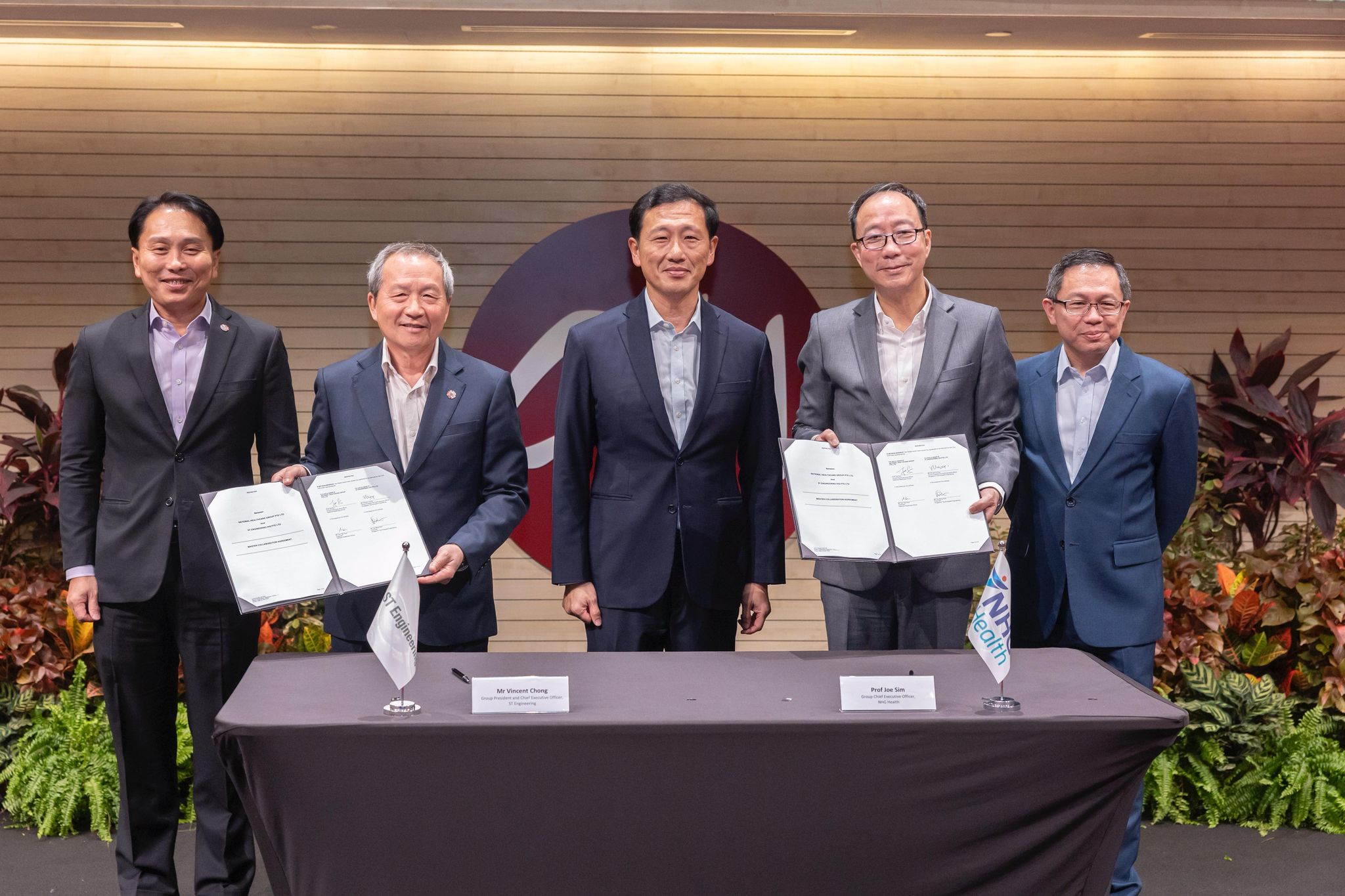
From left to right: Vincent Chong, ST Engineering’s Group President and CEO, Teo Ming Kian, ST Engineering’s Chairman, Ong Ye Kung, Singapore’s Minister for Health, Tan Tee How, NHG Health’s Chairman, and Professor Joe Sim, NHG Health’s Group CEO.
Hospitals are complex. They run around the clock, serve thousands daily, and need to be ready for anything from routine procedures to large-scale emergencies.
“We take a modular approach; building systems that can evolve without needing a full overhaul, while keeping everything secure,” said Low Jin Phang, President of Digital Systems at ST Engineering. “That way, hospitals can evolve over time, securely and without needing to tear everything down and rebuild.”
Instead of layering on disconnected tech or deploying siloed tech, ST Engineering and NHG Health are co-developing integrated solutions that talk to each other. It’s a strategy built on ST Engineering’s smart city experience, where unified, responsive infrastructure is the foundation of resilient urban life.
Instead of layering on disconnected tech or deploying siloed tech, At Tan Tock Seng Hospital (TTSH), that integration is already in motion. The hospital’s Command, Control and Communication (C3) centre pulls together real-time data—on beds, patient movement, staffing, and resources—into one operational view.
As Adjunct Prof. Tang Kong Choong, Chief Executive Officer of TTSH described it, “The TTSH command centre is like the nerve centre for the hospital…it brings together lots of information from different sources, fuses that information, and presents the overall picture for us as leaders.”
Now, the partnership will take that concept further. A next-generation C3 centre, powered by AI and predictive insights, will support better coordination across NHG Health’s entire cluster of institutions.
The strength of the command centre lies in its foundation: structured with live data that makes smart decisions possible. “It allows innovation to sit on top of that data,” said Tan Bin Ru, President of Enterprise Digital at ST Engineering. “Add AI, and you unlock even more: better forecasting, faster response, smarter resource use.”
For example, solutions like the AGIL® Care platform help predict bottlenecks before they happen. MRLN.AI, another key solution, automatically transcribes clinical conversations into structured records, helping clinicians cut down on documentation and focus on care.
“This partnership goes beyond tech deployment. This is about co-creating solutions that work in real hospital settings. NHG Health brings deep clinical and operational insight while ST Engineering brings digital engineering expertise,” explained Tan Bin Ru.
Technology plays a key role in supporting hospital staff. At Woodlands Health, autonomous mobile robots developed by ST Engineering now deliver food and linen, completing over 400 trips per day. That’s 100 man-hours saved daily, time that nurses can now spend with patients.
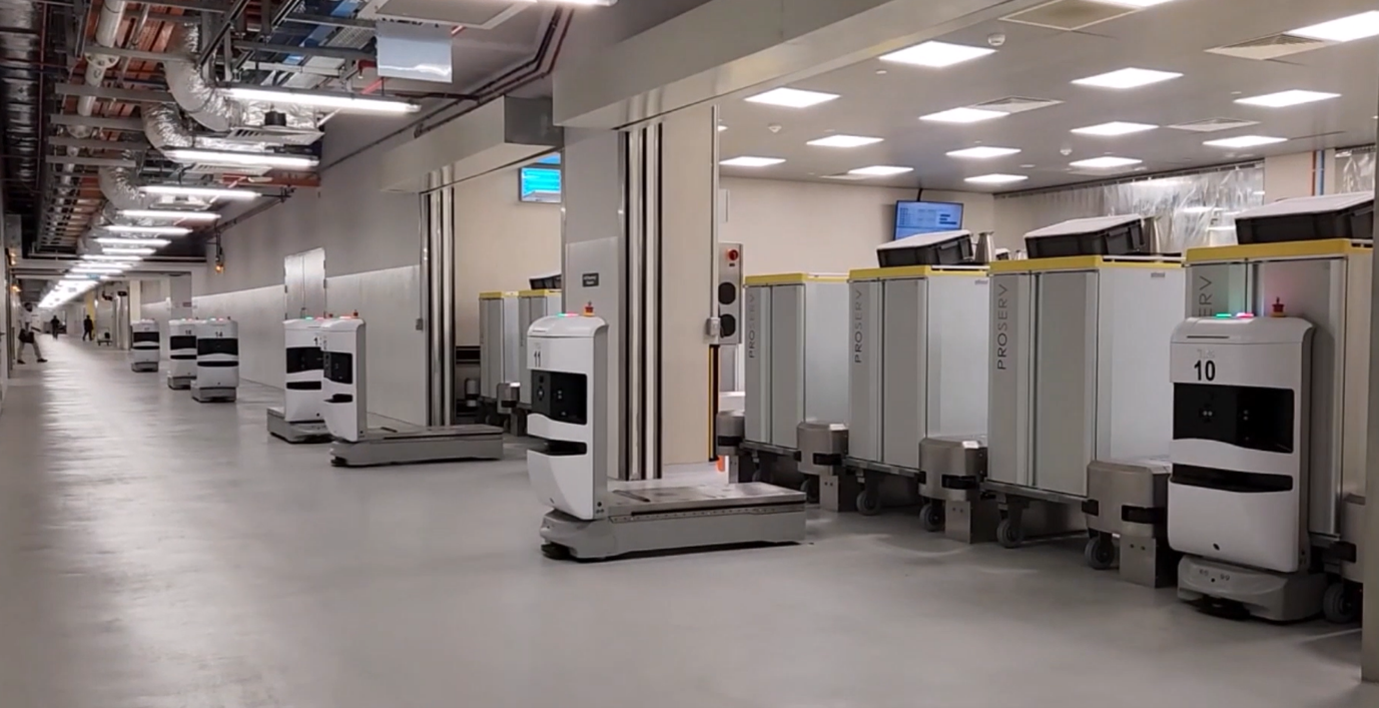 ST Engineering’s autonomous mobile robots at Woodlands Health in Singapore.
With healthcare teams stretched thinner than ever, this kind of automation isn’t a future concept, it’s a practical solution that makes people’s work better. These systems reflect ST Engineering’s broader smart city approach: taking automation tools proven in transport and logistics, and adapting them to the unique needs of healthcare.
Another pillar of the partnership is sustainability. Hospitals use a lot of energy, especially in high-demand spaces like ICUs. ST Engineering’s Airbitat cooling system delivers up to 30% energy savings compared to conventional systems, while improving patient comfort. NHG Health is also exploring AGIL® Smart Energy Building solutions to centrally track carbon and manage energy use across its facilities.
Sustainability here is both a cost and care issue. Greener systems support healthier environments and long-term operational resilience, key goals for any future-ready hospital.
Technology works best when it’s built with the people who use it. That’s the thinking behind the new Engineering Sandbox at the Centre for Healthcare Innovation. This testbed allows frontline staff, engineers, and developers to co-create solutions to real operational challenges, fast-tracking innovation from idea to implementation.
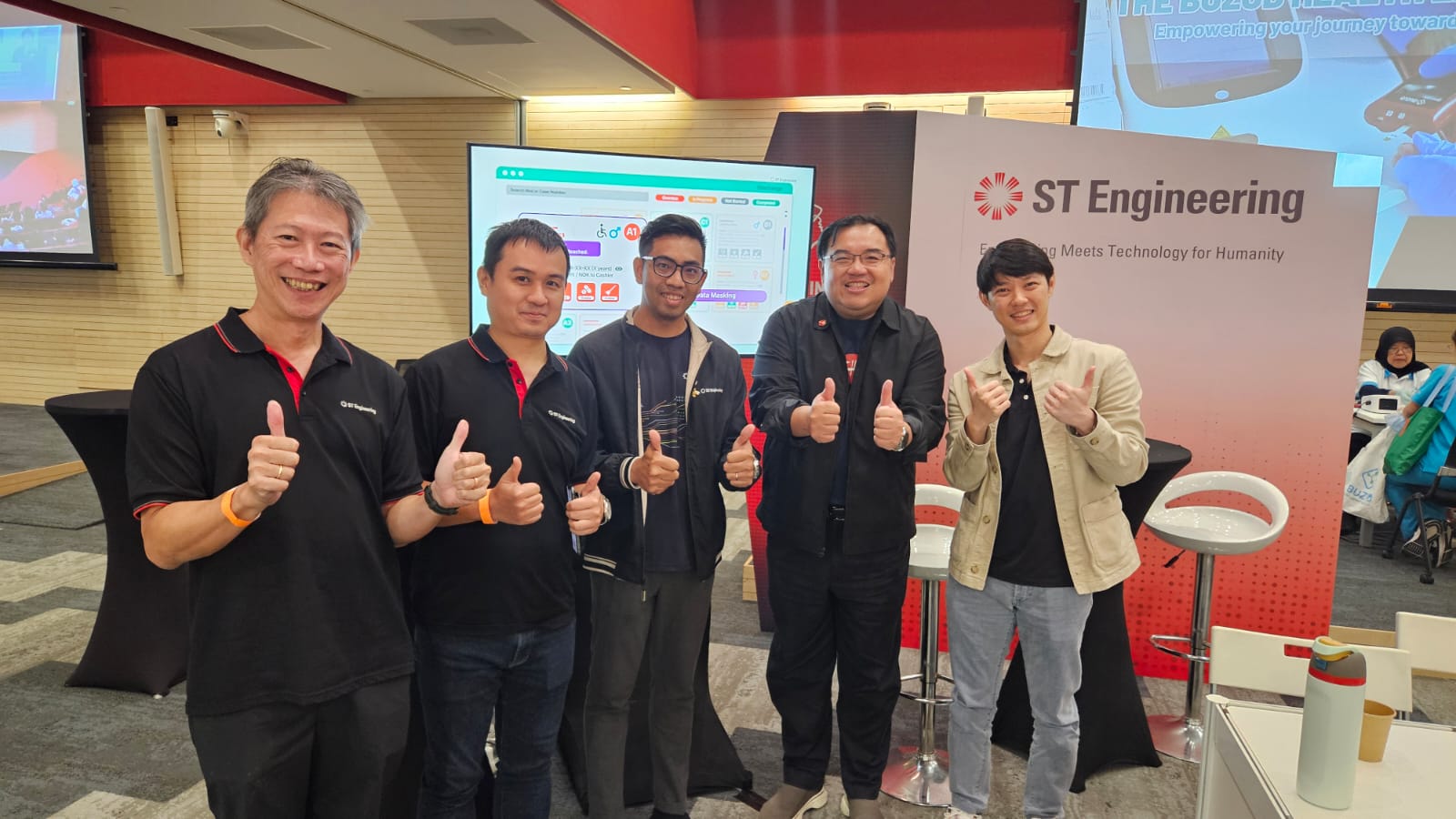 Showcasing ST Engineering’s healthcare solutions at an NHG Health event.
“We are excited by the collaboration between ST Engineering and NHG Health to engineer solutions that matter,” said Professor Eugene Fidelis Soh, Deputy Group CEO, Population Health, NHG Health. “This will help us create better jobs in healthcare and better care for all our patients.”
The sandbox approach shortens the gap between idea and impact, enabling fast feedback, lower risk, and solutions that are ready to scale across the NHG Health cluster.
“This collaboration will open up many opportunities for TTSH to work with ST Engineering to develop new solutions that will help us do our work better,” said Adj. Prof. Tang. “Our clinicians, OPS staff, and administrators all see how co-creation can improve care and support operations.”
That mindset of listening, learning, and co-creating, is what drives the partnership forward. And it reflects a broader belief at ST Engineering: that smart cities don’t just happen through infrastructure. They happen through relationships. Between people, data, systems; and the trust that connects them.
Ultimately, this is about building healthcare systems that can evolve; to respond in a crisis, to grow with the population, and to keep improving over time.
“We focus on making sure hospital systems are reliable, flexible and built to last,” said Low Jin Phang.
In an era where health systems must do more with less, faster than ever before, this kind of engineering-first, user-led, AI-enabled collaboration may well become the new benchmark for healthcare, and for smart cities at large.
By subscribing to the mailing list, you confirm that you have read and agree with the Terms of Use and Personal Data Policy.