


Automation yields benefits beyond efficiency and speed – as a safety layer in aviation maintenance, it can address error-prone, repetitive parts of the maintenance workflow, maintaining precision while keeping human authority and oversight.
Capitalising on this potential, ST Engineering has applied AI and automation across its engine maintenance, repair and overhaul (MRO) operations, such as its AI Automated Picking & Screening Sorter (AI-PASS) solution which performs inspection and verification with consistent quality while reducing exposure to fatigue and human errors.
On June 10, 1990, British Airways Flight 5390 experienced a near-catastrophic failure when its cockpit windscreen detached mid-flight due to incorrectly selected bolts. The aircraft landed safely, but the investigation revealed a critical insight: the failure was caused by human error during routine working conditions rather than system failure.
This incident, and others like it since, demonstrate the limits of the aviation industry’s reliance on layered inspections, procedural discipline and human vigilance to prevent errors. It has produced significant safety gains and remains essential today. However, in high-volume tasks involving thousands of components, where differences can be measured in tenths of a millimetre, human attention can degrade due to fatigue, repetition and time pressure.
Adding more inspection layers does not eliminate this problem. It may simply redistribute the same burden across more people, work steps and handovers. Each additional interface can create another point where human error re-enters the system. As a result, safety improvements can plateau when the work demands continuous attention and precision that humans cannot sustain indefinitely.
Automation can strengthen aviation maintenance by removing variability at its source. Machines do not experience fatigue, while sensors do not rely on memory, visual approximation or concentration. This allows repetitive verification tasks to be performed accurately and consistently, while humans focus on decision-making and oversight.
A key example is ST Engineering’s AI-PASS which is an in-house developed automation tool used at its engine MRO facility. This automation and verification system was developed to address one of the most error-prone areas in maintenance: sorting, inspection and verification.
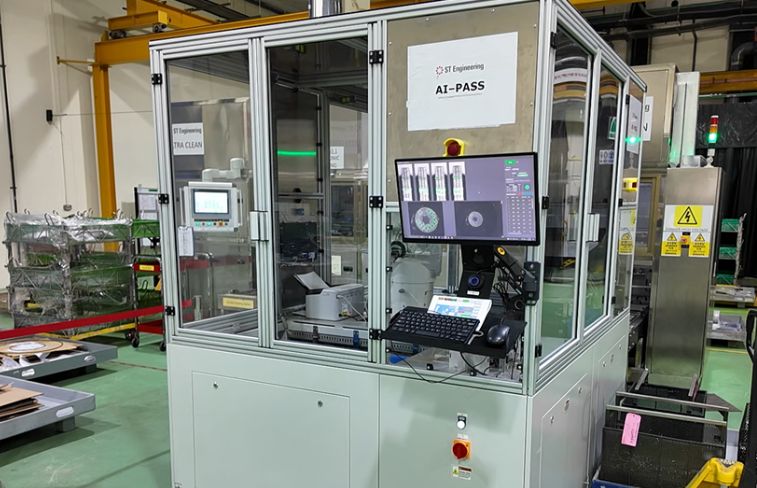
Traditionally, technicians would manually inspect and sort engine components. This work can entail multiple hazards, such as cuts, abrasions from sharp edges, musculoskeletal strain, prolonged eye strain under magnification, pinch point exposure and cognitive overload from repetitive decision making.
AI-PASS transforms this practice into a fully engineered closed-loop and automated verification process. The system integrates mechanical, optical and robotic subsystems to enforce precision by removing visual approximation and manual repetition from the sorting process.
Mechanical hoppers perform initial segregation, while 3D cameras capture component geometry for AI comparison against standard profiles. AI-based machine vision systems will verify features such as thread pitch and dimensions, and optical character recognition reads part markings.
Robotic arms handle the components, eliminating manual contact while automated binning separates accepted and rejected parts. Components that cannot be verified are flagged for human review and every action is automatically logged, creating a digital audit trail for traceability and accountability.
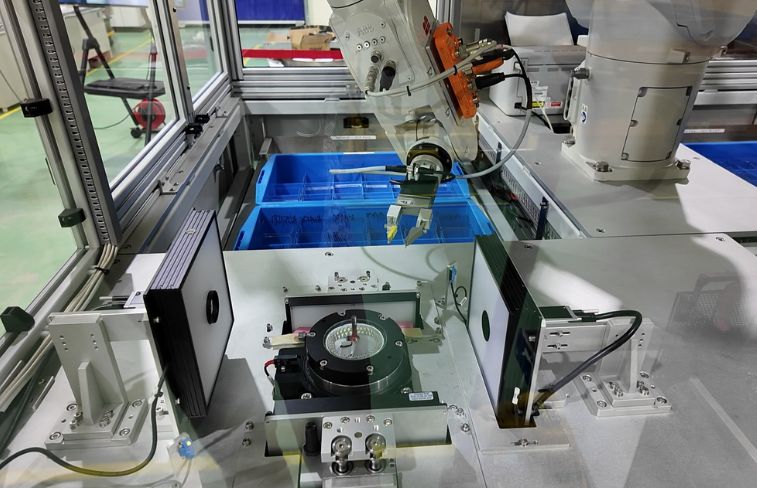
Importantly, AI-PASS does not replace human authority. By removing repetitive inspection tasks and reducing exposure to known failure modes such as fatigue, misidentification and cognitive overload, human inspectors can focus on oversight and exceptions.
As part of a safety strategy, AI and automation redesigns processes so that precision is verified, variability is contained and errors are eliminated before they impact the aircraft. At the same time, regulatory reality remains clear – accountability and final acceptance must continue to reside with qualified humans. Solutions like AI-PASS demonstrate the potential of AI and automation as a new safety layer, strengthening human performance without replacing human responsibility.
By subscribing to the mailing list, you confirm that you have read and agree with the Terms of Use and Personal Data Policy.