


Thought Leadership
Tay Eng Guan shares how ST Engineering is driving engine MRO excellence through capacity growth, digital innovation and skilled talent.
December 2025
Aviation demand has always moved in cycles — but what remains constant is the industry’s need to keep aircraft flying safely, efficiently and reliably. In the wake of a huge rebound in travel demand post-COVID-19, dependable aircraft maintenance has never been more central to keeping global fleets in the air; airlines are extending the lifespans of existing fleets while restlessly awaiting the delivery of new aircraft which have been delayed by supply chain issues stretching back to the pandemic.
With airlines globally pushing their fleets (and the engines powering them) to the limit, MRO shopfloors are operating at full tilt to keep them running at optimal performance. This has led to strong servicing needs for the CFM56 engines used in current-generation Boeing and Airbus narrowbody aircraft.
As operators gradually renew their fleets with new-generation narrowbody aircraft such as the Airbus A320neo and Boeing 737 MAX, which are fitted with more fuel-efficient engines such as the CFM LEAP-1A and LEAP-1B, this servicing need will also change. According to industry reports, LEAP engines in operation have been projected to overtake CFM56s by 2030, with the gap extending thereafter.
In anticipation of the current and shifting needs, ST Engineering has progressively built up its next-generation engine MRO expertise and infrastructure. We are the first in Asia to be designated a Premier MRO provider for LEAP engines by CFM International. Having developed quick-turn and performance restoration shop visit capabilities for the LEAP-1A and LEAP-1B, we are now advancing towards full overhaul services and growing our engine parts repair services. This will allow us to serve airlines throughout the entire lifecycle of their LEAP engines.
At the same time, we are increasing our capacity with an expanded multi-million-dollar engine MRO facility in Singapore, which will progressively ramp up our global capacity for CFM56 and LEAP engines to over 400 annually by 2027.
While capacity expansion remains essential to meeting immediate market needs, the next frontier for MRO providers lies in digital transformation. By increasingly harnessing technology and data-driven insights, the industry is unlocking new levels of precision, efficiency and workforce empowerment.
From AI that can optimise maintenance schedules to smart systems that leverage IoT sensors on the shopfloor to enhance MRO workflows, technology has enabled the MRO industry to deliver services faster, better and with greater precision. The benefits of innovative technologies are twofold – not only can MRO providers better serve their customers, technicians and engineers—the backbone of the MRO industry—enjoy improved workplace safety and comfort and can focus on higher-value skill-based work.
In recent years, ST Engineering has leveraged digital transformation as a key growth pillar to reshape its processes and capabilities and drive continuous improvement.
Our AI Visual Evaluation Technology (AI-VET) and AI Pick and Screen Sorting (AI-PASS) solutions utilise artificial intelligence and robotics to automate inspection and parts sorting, saving manhours and improving accuracy. Other innovations such as the Underwater Polishing Cobot and Ultra Clean ultrasonic cleaning system reduce manual labour and time spent cleaning engine parts. Meanwhile, our AI-powered Engine Health Monitoring system analyses sensor data to detect potential issues early, enabling data-informed maintenance decisions and cost savings.
Even as technology transforms MRO processes, people remain at the heart of operational excellence. The ability to sustain high standards of quality, safety and efficiency depends not only on advanced tools and automation, but also on a skilled and motivated workforce supported by strong training and development frameworks.
For MRO players, the real challenge is balancing investments in next-generation capabilities and highly skilled personnel with cost effectiveness. Rising labour and material costs pose major challenges that the industry will have to navigate. To maintain a strong talent pipeline that can support our growth momentum, we partner educational institutions to attract and train students for a career in aviation maintenance. In Singapore, we deepened our longstanding collaboration with the Institute of Technical Education to co-develop an engine MRO training facility that replicates actual processes in the MRO industry.
Meeting the growing and shifting demand for engine maintenance calls for more than capacity growth — it requires innovation, capability and people. By advancing technologies, deepening expertise and investing in talent, ST Engineering is strengthening its foundation for enduring excellence in engine MRO, supporting safe and reliable flight worldwide.
ST Engineering’s engine MRO business provides competitive turnaround times, extensive in-house repair expertise and flexible scheduling to optimise engine performance. With proven experience, growing capacity and deep CFM56 and LEAP engine capabilities, we can deliver total engine support for airlines and operators.
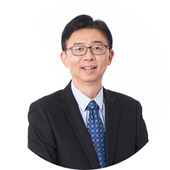
Tay Eng Guan,
Head of Engine Services,
Commercial Aerospace
By subscribing to the mailing list, you confirm that you have read and agree with the Terms of Use and Personal Data Policy.
