


The nacelle sector is entering a new phase of development. These aerodynamic housings that encase aircraft engines play a critical role in aircraft fuel efficiency, engine protection, noise reduction and even braking. But the continual drive to make nacelles lighter, quieter and more capable is no longer enough. Today, it is how these goals are being industrialised that distinguishes industry leaders and creates real industry transformation.
With over 90 years of experience in developing complex aerostructures including nacelle systems and other structural airframe components, ST Engineering’s nacelle design and manufacturing subsidiary in Baltimore, U.S., ST Engineering MRAS (“MRAS”) is leading that transformation in more ways than one.
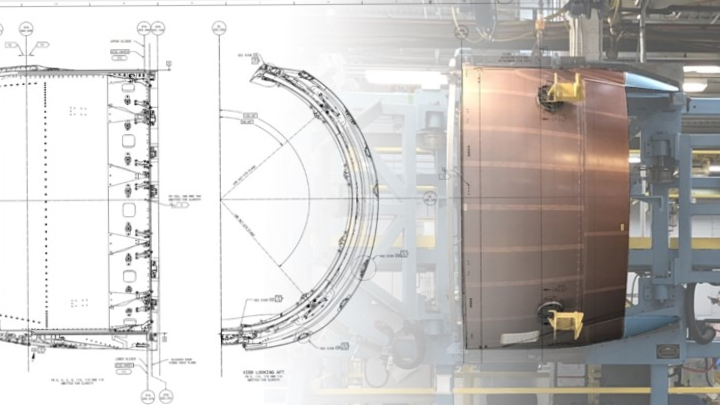
MRAS’ maturity in design-for-manufacture is central to its success in nacelle development. Backed by decades of experience in composite structures, MRAS fabricates nacelle components using a wide range of resin systems and carbon fibre forms from leading suppliers. With the use of these advanced materials, engineering teams are able to incorporate aerodynamic and thermal performance requirements into optimised nacelle structures.
This integration of design and production disciplines enables MRAS to achieve design-for-manufacture maturity rarely matched in the nacelle sector. Rather than focusing on laboratory demonstrators, the company develops repeatable, rate-capable processes that comply with certification standards from the U.S., European, Chinese and Canadian aviation authorities for strength, fatigue and damage tolerance.
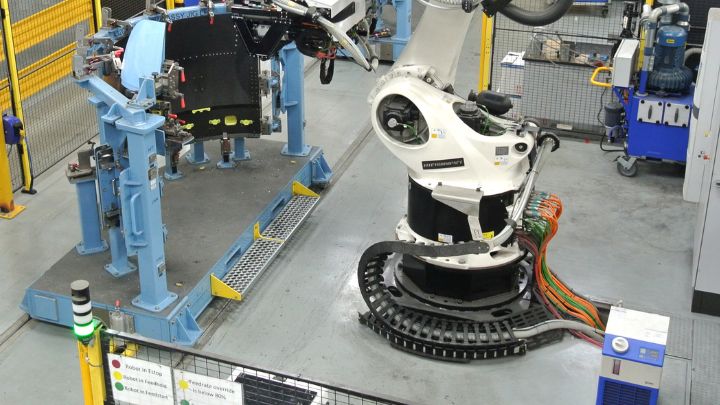
Innovation is also embedded in MRAS’ smart manufacturing processes. Leveraging automation and digital integration, MRAS has built one of the most advanced nacelle manufacturing ecosystems, complete with an extensive clean-room lay-up and assembly areas in its nearly 180,000 square metre Baltimore facility.
At MRAS, automation isn’t just a shiny technology showcase or speed enhancer; it brings about greater precision and quality assurance. While human technicians undertake higher-order engineering tasks and judgement calls, digital solutions perform manual work with consistent results.
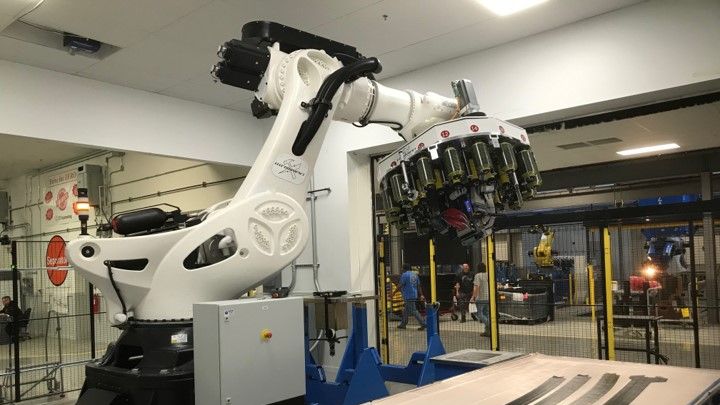
For instance, MRAS’ Automated Fibre Placement (AFP) systems build products and simultaneously inspect materials to continually monitor process parameters.
Automation is also applied to other key processes like tool cleaning, acoustic drilling and robotic assembly for micron-level precision and a consistent end product.
Beyond the product floor, robots perform scheduled facility inspections using acoustic, thermal and light detection and ranging (LiDAR) sensors, assessing equipment condition and detecting deviations. This supports predictive monitoring so processes run reliably and MRAS remains operationally resilient.
Furthermore, in MRAS, a unified data pathway links engineering design, manufacturing execution, testing and lifecycle support – meaning that every step in the product lifecycle is digitally connected and traceable. This digital thread runs across 10 autoclaves, multiple ovens and computer numerical control (CNC) machining centres.
Such data continuity accelerates certification, strengthens traceability and provides critical feedback for maintenance and sustainment planning—a big competitive and operational advantage for not just MRAS but its customers.
With advanced materials, design-for-manufacture maturity and high-tech solutions as enhancers, MRAS is setting benchmarks in aerostructure innovation.
Its nacelle systems and complex structures are supporting some of the world’s most iconic aircraft including the Boeing 767, 747, and 777X, Airbus A320neo, Lockheed Martin C-5 and C-130J and Bombardier Global 7500. It also engineers high-performance composite components for Archer Aviation and other companies in the advanced air mobility space. This extensive body of work is something that few other nacelle suppliers can match.
Moving forward, MRAS is positioning the nacelle as a system enabler for future propulsion technologies, rather than a passive structure. Current R&D efforts focus on new composite architectures, improved acoustic liners and integrated systems to align with next-generation engines and hybrid-electric platforms.
With industrial capability and innovation that progress in parallel and the ability to turn advanced concepts into certified scalable products, MRAS is confidently shaping nacelles and aerostructures of the future.
By subscribing to the mailing list, you confirm that you have read and agree with the Terms of Use and Personal Data Policy.