Commitment
We are committed to conducting our business in a responsible manner and comply with all applicable law and regulations including export control, trade sanctions and embargoes.
We do not tolerate fraud, bribery, corruption and misconduct across our operations. We are determined to foster and maintain an environment where anyone can report any wrongdoing, in good faith, without the fear of retaliation.
We are committed to not designing, producing or selling antipersonnel mines, cluster munitions and white phosphorous munitions or any of their related key components. Our commitments in relation to human rights are guided by international human rights principles encompassed in the Universal Declaration of Human Rights, the International Labour Organisation’s Declaration on Fundamental Principles and Rights at Work, the United Nations Global Compact (UNGC) and the United Nations (UN) Guiding Principles on Business and Human Rights. Our policies, operations and relationships with our stakeholders reflect these principles of respecting people’s dignity and their inherent rights.
Governance and Framework
We have a single-tier Board with a majority of Independent Directors. The Board comprises a diverse group of individuals with a broad range of ages and tenures, drawn from various backgrounds and areas of expertise. This diversity fosters a rich tapestry of thought and experience, and ensures a balanced perspective that enriches Board’s discussions and decision-making processes. Consequently, the Board is able to make robust decisions considering the best interests of the Group and all stakeholders. The Board is supported by two Company Secretaries who ensure that the board processes and regulatory requirements are followed, while advising on best practices in corporate governance.
Read more about our Board
The Risk and Sustainability Committee (RSC), originally established as the Risk Review Committee (RRC) in 1998, updated its Terms of Reference to incorporate responsibilities and oversight for sustainability and workplace safety and health in 2020 and 2025 respectively. The RSC assists the Board in its risk governance responsibility. This ensures that a sound system of controls is in place for identifying and managing risks to safeguard stakeholder interests and the Group’s assets. Additionally, it oversees sustainability issues and their reporting, including those related to climate change. Annually, the RSC updates the Board on its achievements according to its workplan. In addition, the RSC ensures that management communicates all significant risk and control issues promptly to the Board, and remedial actions are taken to prevent lapses. The RSC is supported on risk related matters by the Risk & Assurance (R&A) function which in turn liaises with Risk Champions appointed by the respective business areas and functions.
Read more about our Risk and Sustainability Committee
The R&A function is integral to ensuring that ST Engineering manages its key risks well, complies with applicable regulatory requirements where it operates, and has the appropriate governance and controls in place. Our policies include:
- Code of Business Conduct and Ethics
- Gifts and Hospitality Policy
- Export Control Policy
- Whistle-Blowing Policy
- Governance Policies in general
The Group Head, R&A reports to the Group Chief Financial Officer. The R&A function provides leadership in the implementation of a Group-wide ERM framework and ensures the continued adequacy and effectiveness of relevant policies and procedures at all our business areas and functions through regular review and training.
Read more about our Key Risks
The Control Self-Assessment (CSA) is designed to reinforce control ownership and awareness of key risks across the Group. The primary objective of CSA is to identify significant weaknesses in internal controls and facilitate the timely formulation and execution of remedial actions to address control lapses. Independent controls testing is also conducted by the CSA Champions to assess the adequacy and operating effectiveness of key controls. Action plans are implemented to address any major exceptions identified, commensurate with the risk exposure. The Board receives, at regular intervals, updates from the Board Committees on the key business risks, and Internal Audit (IA) reports on the operational effectiveness of internal controls.
Global Trade Compliance (GTC) Programme and Strengthening Internal Controls
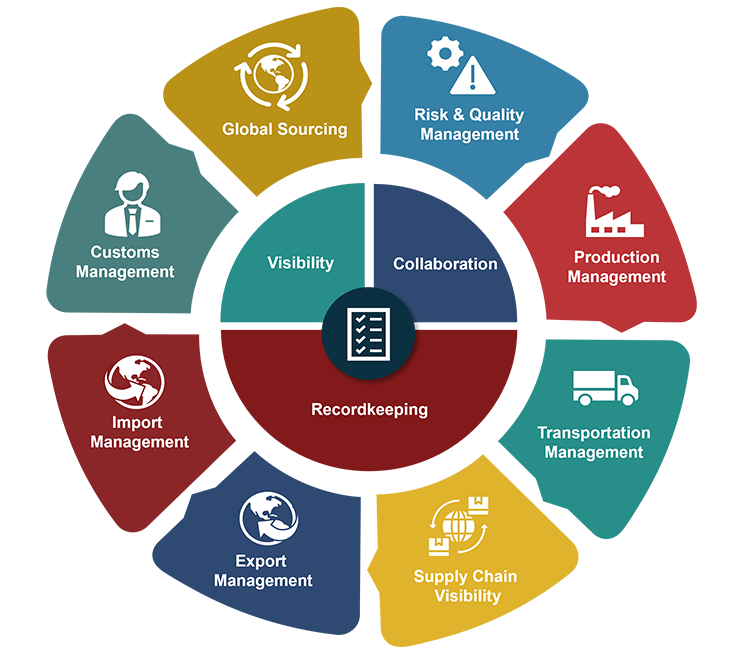
In the world of international trade, responsible operations are not just an obligation but a vital aspect of our business integrity. We recognise the importance of a GTC framework covering key areas in Import/Export Management, Supply Chain Management and Resilience, Risk and Quality Management, so as to maintain trust with stakeholders. This framework enables us to identify, assess and mitigate trade-related risks, ensures required business licenses and permits are obtained and facilitates the implementation of proper protocols for reporting compliance issues.
We recognise that effective trade compliance extends beyond legal adherence - it embodies our commitment to ethical, transparent, and globally responsible operations. Hence, we maintain high standards of operational discipline through:
- Recordkeeping: Provides the backbone for accountability, enabling detailed tracking and tracing of all transactions and interactions.
- Policies and Procedures: Serves as the operational manual for executing each of the key elements, ensuring consistency across the Group.
- Training and Education: Equips staff with the knowledge and skills required to implement and adhere to the policies and procedures effectively.
Global Trade Compliance