

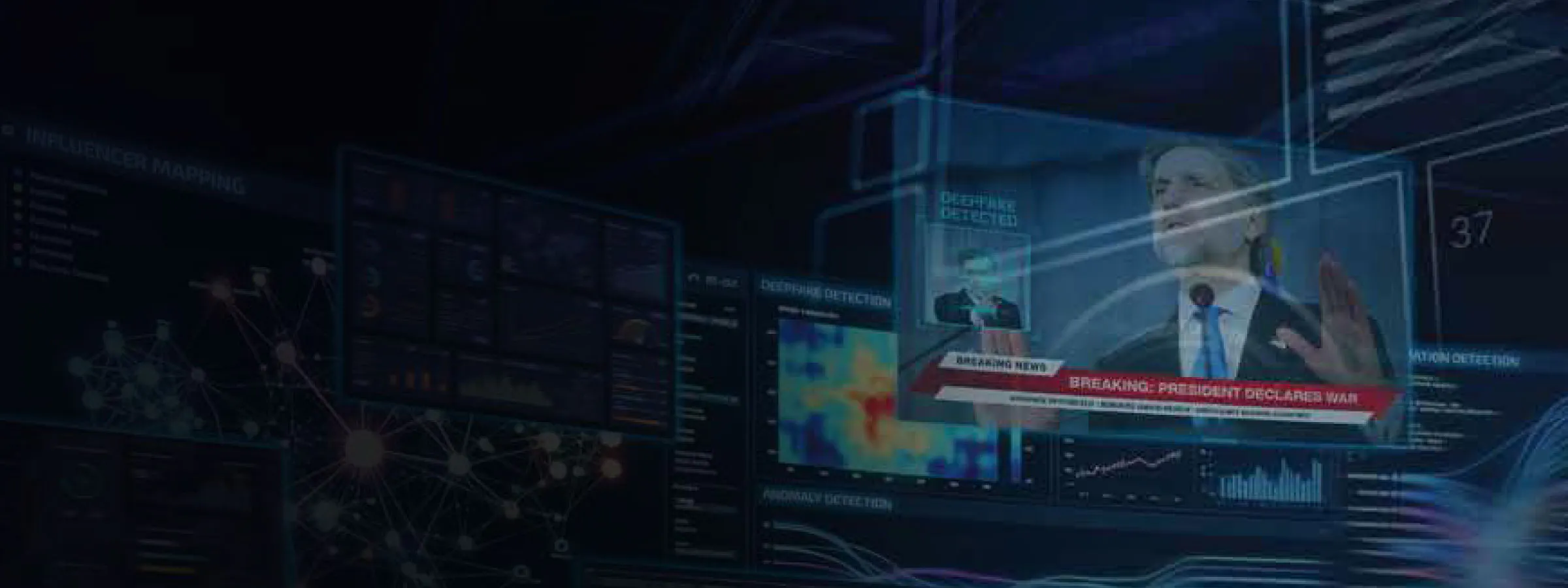
"In an era where perception can shape decisions, organisations need more than a steady stream of online information. News, social media, forums, and digital communities generate vast amounts of content, making it difficult to identify what matters, what is changing, and which signals may require attention. AI can help turn this complex information landscape into structured insights that support faster, more informed decisions.
Traditional media monitoring often relies on keyword tracking and retrospective reporting. While these methods can identify mentions and recurring terms, they may not explain how narratives are developing, who is influencing them, or how different conversations are connected. As information moves quickly across multiple platforms, organisations need analysis that can connect signals across sources rather than viewing each channel in isolation.
AI-driven information analysis can provide a broader view by examining both structured and unstructured data. Technologies such as natural language processing, sentiment analysis, topic clustering, network analysis, and large language models can help identify themes, changes in sentiment, and relationships between conversations. This allows teams to move from simply asking what people are saying to understanding how, where, and by whom narratives are developing.
The value of AI is not simply in collecting more information. Its greater role is helping organisations organise large volumes of content into patterns that people can interpret and act upon. By combining information from news, social platforms, forums, and other digital communities, AI-powered analysis can surface emerging themes and potential risks that may otherwise be difficult to identify manually.
A unified intelligence layer can also reduce the need to move between multiple monitoring tools. Content analysis can bring together text, video, and online conversations while supporting functions such as sentiment analysis, alerting, network mapping, and AI-assisted summarisation. The result is a clearer view of the information environment and greater situational awareness for teams responsible for strategic decisions.
| Traditional Monitoring | AI-Powered Information Analysis |
|---|---|
| Focus mainly on keywords and mentions | Identifies themes, relationships and emerging patterns |
| Often relies on retrospective analysis | Supports continuous monitoring and earlier signals |
| Examines sources separately | Connects information across multiple digital channels |
| Requires more manual interpretation | Uses AI to accelerate analysis and summarisation |
This shift is particularly useful in complex and fast-moving environments. Instead of waiting for a narrative to become obvious, organisations can examine changes as they develop and determine which signals deserve closer attention. AI therefore becomes a tool for improving the speed and context of human decision-making rather than simply increasing the volume of information available.
Understanding an online narrative also requires understanding the networks behind it. Network analysis can reveal relationships among accounts, communities, and sources, helping analysts identify influential actors and patterns of coordinated behaviour across monitored platforms. This type of analysis can provide important context when a particular narrative begins to spread or change direction, enabling proactive risk management.
Key capabilities can include:
These capabilities help organisations examine not only individual pieces of content but also the broader information environment. When combined with continuous monitoring, they can support earlier identification of potential risks, emerging narratives, and changes in public sentiment.
More information does not always mean better information. Misinformation, disinformation, manipulated media, and synthetic content can make it difficult for organisations to determine whether an online claim is trustworthy. Fact-checking and source verification therefore form an important part of modern information intelligence.
ST Engineering's AGIL® Insights is designed to analyse digital discourse across global news, social media, forums, and digital communities. Its capabilities include narrative mapping, influence analysis, sentiment sensing, topic clustering, network analysis, monitoring, alerting, and AI-assisted summarisation. The platform can also work with AGIL® Trust, which provides AI-driven fact-checking and content verification capabilities to help identify manipulated or inaccurate information.
| Information Challenge | AI-Supported Approach |
|---|---|
| Large Volumes of Digital Content | Automated analysis and summarisation |
| Changing Narratives | Topic and sentiment analysis |
| Complex Influence Networks | Network and relationship mapping |
| Potentially Misleading Content | Fact-checking and content verification |
| Slow Manual Monitoring | Continuous monitoring and alerts |
This combination can help organisations build a more complete understanding of digital information before acting on it. Rather than treating every online claim as equally reliable, teams can use analysis and verification to assess context, credibility, and potential impact.
Real-time monitoring becomes more valuable when insights are connected to practical decision-making. Continuous analysis can help teams spot early signals, understand developing narratives, and assess changes across different information sources. This is especially relevant when organisations operate in environments where public perception, information integrity, or emerging risks can affect operational priorities.
ST Engineering positions its intelligent insights capabilities around actionable intelligence and AI-driven workflows that support operational decision-making. Its broader approach combines advanced AI analysis with capabilities such as fact-checking, stance analysis, anomaly detection, and multimodal analysis across text, audio, and visual content.
As digital content grows too complex for manual monitoring, AI enables organisations to connect information, detect emerging themes, map influence networks, and verify content in real time. Beyond simply collecting data, solutions like ST Engineering’s AGIL® Insights and AGIL® Trust transform overwhelming online noise into structured context, empowering decision-makers to respond to critical signals with speed and confidence.
By subscribing to the mailing list, you confirm that you have read and agree with the Terms of Use and Personal Data Policy.