Thought Leadership
Sarbjit Singh shares how targeted investments in maintenance, upgrades and training can help operators maximise the long-term value of their airlifter fleets.
November 2026
Tactical airlifters remain indispensable for missions ranging from troop transport and cargo delivery to disaster relief and humanitarian response. Their ability to operate from remote, austere or damaged airstrips makes them a critical capability in both military operations and national resilience efforts.
Given their vital role, fleet readiness remains a key priority for operators. Yet readiness can diminish over time as technology advances, mission profiles evolve and operating environments become more complex. New airspace requirements, digital systems, changing threat scenarios and harsher deployment conditions can gradually widen the gap between what legacy tactical airlifters were originally designed for and what today’s missions demand.
The Fleet Readiness Question
The challenge for many operators is not merely about replacing the aircraft but maximising operational capability over the long term. Procurement of new airlifters involves considerations including impact on the budget, as well as additional investments such as infrastructure modifications and retraining for pilots and maintenance crews. Crew retraining may also affect operational readiness, as they must familiarise themselves with an all-new platform.
With a strong track record of mission success, older tactical airlift platforms continue to be a versatile, dependable and cost-effective option. Notwithstanding issues such as ageing fleets and systems as well as component obsolescence, the right balance of maintenance, upgrades and training investments can enable operators to successfully maximise long-term fleet value from existing airlifter assets.
Beyond Maintenance: Sustaining Relevance Through Modernisation
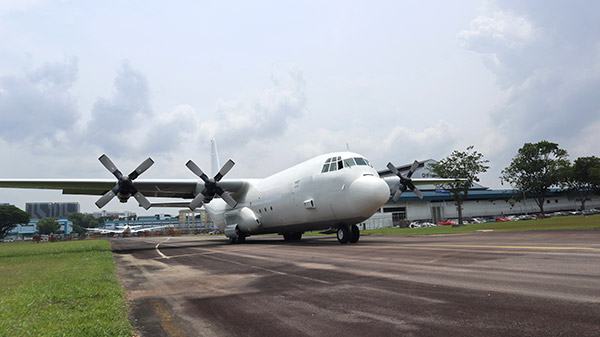
For long-serving tactical airlifters such as the Lockheed Martin C-130 Hercules, which first flew in 1954 and has remained in continuous production for more than seven decades, status quo maintenance is no longer enough. Sustaining these platforms requires experienced MRO providers with deep platform knowledge and the ability to go beyond routine upkeep — from managing ageing structures and component obsolescence to integrating upgrades, improving maintainability and supporting fleet readiness with reliable turnaround times.
Upgrades such as replacing legacy analogue avionics with digital glass cockpit displays, advanced flight management systems, modern navigation and communication equipment, enhanced autopilot capabilities and terrain awareness systems help ensure compliance with modern airspace requirements and enhance safety, capability and longevity. These cockpit technologies can reduce aircrew workload and, when coupled with enhanced training systems, enable faster and better-informed decision-making. Long-term structural improvements, including centre wing box replacements, also extend aircraft lifespans while supporting higher maximum take-off weights and greater payload capacity.
This is where modernisation should be treated as a strategic lever — not a periodic upgrade exercise. Together with their service provider, operators seeking to extend the relevance of proven tactical airlifters can prioritise embedding modernisation within a broader sustainment roadmap that addresses ageing systems, structural requirements and evolving operational demands in a coordinated way.
The Right Ecosystem for Long-Term Sustainment
The priority, therefore, is to execute modernisation as part of an integrated sustainment programme — one that strengthens capability without compromising fleet availability. This makes partner selection critical. Operators need MRO providers that understand the platform, can anticipate upgrade needs and have the engineering depth to integrate modern avionics, mission systems and capability enhancements as part of a coordinated sustainment programme.
For C-130H operators, this is supported by a mature global supply chain, OEM support and established service centres with deep platform experience. In this wider sustainment network, Lockheed Martin-approved C-130H service centres play an important role in helping operators to address obsolescence, improve maintainability and extend fleet life. ST Engineering, for example, brings together decades of MRO experience with avionics modernisation and digital systems integration capabilities to support long-term fleet readiness with minimal disruption to operations.
As a Lockheed Martin-approved service centre and Centre of Excellence for the C-130H/L-100, ST Engineering has redelivered more than 685 C-130H aircraft and overhauled more than 1,260 T56 engines to date. Among these successful redeliveries are complex structural tasks such as L-100 centre wing box replacements for operators such as Lynden Air Cargo and C-130H avionics upgrades for Southeast Asian, Middle Eastern and African air forces in collaboration with OEMs. ST Engineering has established longstanding partnerships with many of these operators, some spanning decades, underscoring its track record of quality, reliability and engineering depth.
Ultimately, operators today have the option of doing more than keeping tactical airlifters flying for longer. By partnering with a trusted service provider that can deliver the right balance of maintenance, modernisation and sustainment, they can enhance proven platforms to meet evolving mission demands while extracting greater long-term value from their existing fleets.
Originally published in DefenceWeb
With over 50 years of aerospace expertise, ST Engineering’s Defence Aerospace business provides aircraft MRO, engineering, tactical datalink, and one-stop flying & maintenance training services. It is a Lockheed Martin-approved C-130 Hercules Service Centre and Centre of Excellence for the C-130 and L-100 fleets with comprehensive capabilities spanning maintenance, modernisation, missionisation and lifecycle support, helping operators worldwide enhance readiness, extend service life and sustain mission effectiveness.

Sarbjit Singh
President Defence Aerospace,
ST Engineering
By subscribing to the mailing list, you confirm that you have read and agree with the Terms of Use and Personal Data Policy.